

No one knows your score but you. This is your personal checkpoint.

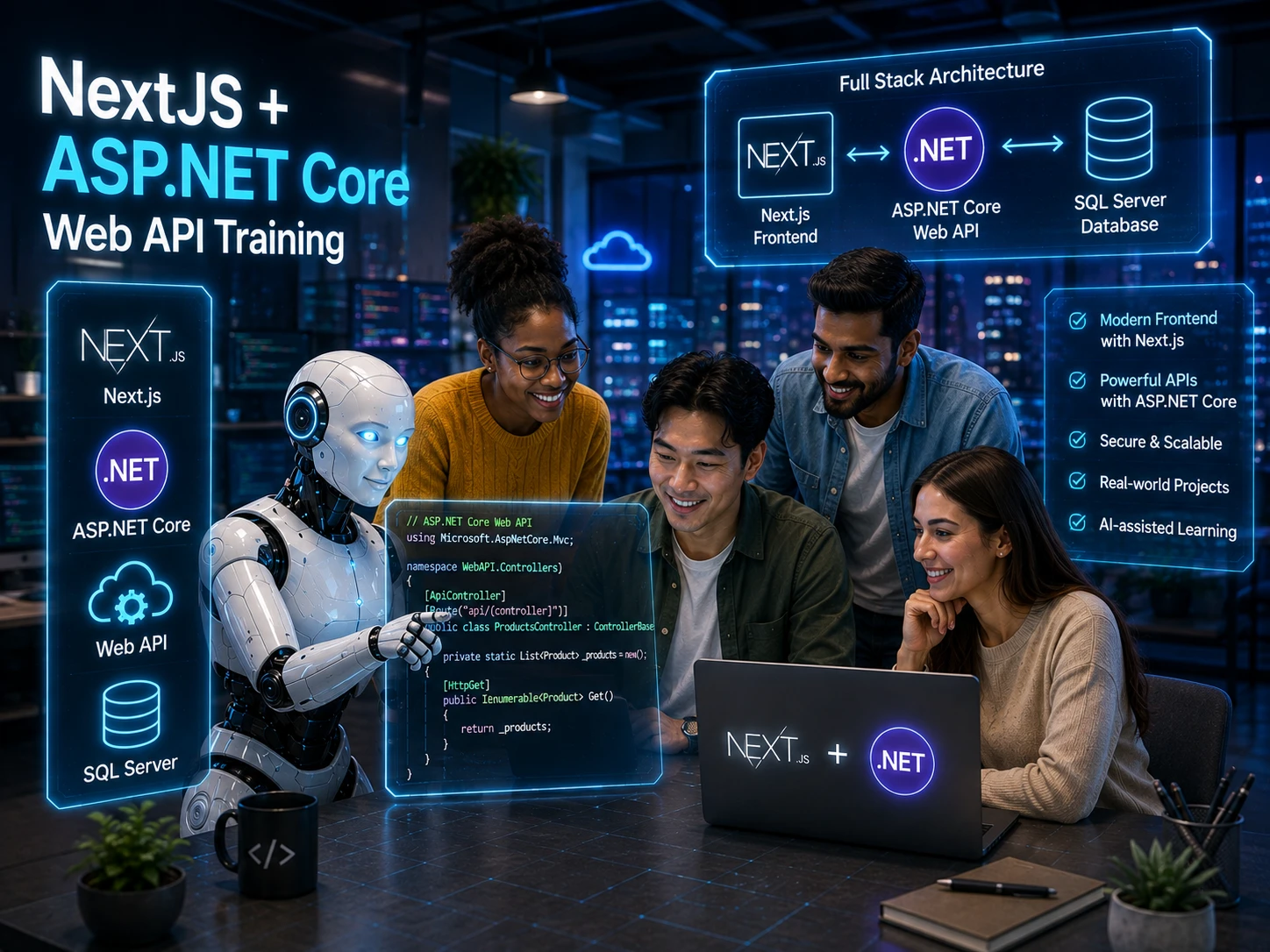
Rendering Meets Dot NET
ASP.NET Core NextJS Full Stack Course Server Components and ASP.NET Core Endpoints
ASP.NET Core NextJS Full Stack Course at Wisen, Chennai, India, develops practical skills for building complete applications with a Next.js frontend and an ASP.NET Core backend. Learn Next.js rendering, ASP.NET Core Web APIs, Entity Framework, authentication, application structure, testing, and deployment through AI-Paired Training and projects that resolve the rendering boundary before writing either half.
“When both ends want to render and to route, the first design decision is which one stops.”
2700+ Career-Focused Learners/Year
Industry Trust From 30+ Corporates
A Community of 17,700+ Trained Learners
27+ Years of Learning Excellence
Develop AI-Ready Career Skills
Learn, Build and Become Project-Ready
Build real capability first, then let AI improve the way you practice and deliver.
Gain Knowledge. Grow Your Career.
ASP.NET Core + Next.js Full Stack Course Syllabus
The course curriculum for ASP.NET Core + Next.js Full Stack Course maps the syllabus into chapter-wise practice, live code review and AI-assisted exercises. It connects ASP.NET Core + Next.js Full Stack training with API development workflows, so learners build tooling confidence, project-ready habits and growth.
App Router, Server Components, rendering strategies and SEO.
- Chapter 1Next.js Foundations
- Chapter 2Server and Client Components
- Chapter 3Data Fetching and Caching
- Chapter 4Server Actions and Mutations
- Chapter 5Route Handlers, Middleware and APIs
- Chapter 6Styling, Assets and UI
- Chapter 7SEO, Metadata and Structured Data
- Chapter 8Authentication, Sessions and Security
- Chapter 9Performance and Optimisation
- Chapter 10Testing, Deployment and Operations
Web APIs, middleware, EF Core and secure .NET services.
Chapter 1ASP.NET Core Foundations
ASP.NET Core Foundations
This chapter focuses on What ASP.NET Core is, Hosting models and Kestrel, Creating a Web API project and the practice needed to use these concepts confidently in real projects.
- What ASP.NET Core is
- Hosting models and Kestrel
- Creating a Web API project
- The Program file and the builder
- The service container and the app pipeline
- Launch profiles and environments
- The development, staging and production environments
- appsettings files and precedence
- User secrets in development
- Environment variables as configuration
- The options pattern
- Validating configuration at startup
- Dependency injection registration
- Service lifetimes in a web app
- Scoped services per request
- The HTTP request pipeline
- Endpoint routing
- Minimal APIs
- Controller-based APIs
- Choosing minimal APIs or controllers
- Hot reload and the development loop
- Project structure conventions
Chapter 2Endpoints, Routing and Model Binding
Endpoints, Routing and Model Binding
This chapter focuses on Route templates, Route parameters and constraints, Attribute routing on controllers and the practice needed to use these concepts confidently in real projects.
- Route templates
- Route parameters and constraints
- Attribute routing on controllers
- HTTP method attributes
- Route groups in minimal APIs
- Query string binding
- Route value binding
- Body binding and content types
- Header and form binding
- Complex type binding
- Custom model binders
- ActionResult and typed results
- Returning status codes
- Problem details responses
- Content negotiation
- JSON serialisation options
- Custom converters
- File uploads
- File downloads and streaming
- API versioning
- Deprecating endpoints
- Designing a consistent API surface
Chapter 3Middleware and Filters
Middleware and Filters
This chapter focuses on What middleware is in ASP.NET Core, The order of the pipeline, Built-in middleware components and the practice needed to use these concepts confidently in real projects.
- What middleware is in ASP.NET Core
- The order of the pipeline
- Built-in middleware components
- Static files middleware
- Routing and endpoint middleware
- Writing inline middleware
- Writing a middleware class
- Short-circuiting the pipeline
- Branching with Map and MapWhen
- Exception handling middleware
- Developer exception page
- Status code pages
- HTTPS redirection and HSTS
- CORS middleware
- Response compression
- Response caching
- Output caching
- Rate limiting middleware
- Action filters
- Result and exception filters
- Endpoint filters in minimal APIs
- Choosing middleware or a filter
Chapter 4Validation and Error Handling
Validation and Error Handling
This chapter focuses on Model state validation, Data annotation attributes, Custom validation attributes and the practice needed to use these concepts confidently in real projects.
- Model state validation
- Data annotation attributes
- Custom validation attributes
- IValidatableObject
- FluentValidation integration
- Validating minimal API parameters
- Automatic 400 responses
- Customising validation responses
- The ProblemDetails standard
- Custom problem details factory
- Domain exceptions
- Mapping exceptions to status codes
- Global exception handling
- IExceptionHandler
- Logging exceptions correctly
- Not leaking internal details
- Handling 404 for missing resources
- Concurrency conflict responses
- Validation for nested objects
- Localised validation messages
- Testing validation behaviour
- A consistent error contract
Chapter 5Data Access with EF Core
Data Access with EF Core
This chapter focuses on Registering the DbContext, Connection string configuration, DbContext lifetime in web apps and the practice needed to use these concepts confidently in real projects.
- Registering the DbContext
- Connection string configuration
- DbContext lifetime in web apps
- Entity configuration
- Relationships and navigation properties
- Migrations workflow
- Applying migrations at startup
- Seeding data
- Querying with LINQ
- Filtering, sorting and paging
- Projections to DTOs
- AsNoTracking for read paths
- Split queries
- Eager, explicit and lazy loading
- Detecting N+1 queries
- Transactions and SaveChanges
- Optimistic concurrency tokens
- Interceptors and audit fields
- Raw SQL when needed
- Compiled queries
- Repository and unit of work debates
- Testing data access
Chapter 6Authentication and Authorisation
Authentication and Authorisation
This chapter focuses on Authentication schemes, Cookie authentication, JWT bearer authentication and the practice needed to use these concepts confidently in real projects.
- Authentication schemes
- Cookie authentication
- JWT bearer authentication
- Token validation parameters
- Issuing tokens
- Refresh token flows
- ASP.NET Core Identity
- Customising the identity model
- External providers and OAuth
- OpenID Connect basics
- Claims and the ClaimsPrincipal
- Authorisation policies
- Role-based authorisation
- Claims-based authorisation
- Requirements and handlers
- Resource-based authorisation
- Securing minimal API endpoints
- Anonymous endpoints
- API keys for services
- Multi-tenancy considerations
- Testing secured endpoints
- Security review checklist
Chapter 7Logging, Configuration and Observability
Logging, Configuration and Observability
This chapter focuses on The logging abstraction, Log levels and categories, Structured logging and the practice needed to use these concepts confidently in real projects.
- The logging abstraction
- Log levels and categories
- Structured logging
- Serilog integration
- Log scopes and correlation
- Request logging middleware
- Redacting sensitive data
- Configuration providers
- Hierarchical configuration
- Reloading configuration
- Feature flags
- Health checks
- Readiness and liveness probes
- Metrics with OpenTelemetry
- Distributed tracing
- Activity and correlation ids
- Exporting to observability backends
- Error tracking integration
- Alerting strategy
- Diagnosing production incidents
- Performance counters
- Observability checklist
Chapter 8Background Work, Real Time and Integration
Background Work, Real Time and Integration
This chapter focuses on Hosted services, BackgroundService implementation, Scoped services in background work and the practice needed to use these concepts confidently in real projects.
- Hosted services
- BackgroundService implementation
- Scoped services in background work
- Periodic timers
- Queue-based background processing
- Message brokers and .NET
- Idempotent message handling
- Outbox pattern
- HttpClientFactory
- Typed HTTP clients
- Resilience with Polly
- Retries, timeouts and circuit breakers
- gRPC services
- gRPC clients
- SignalR for real-time updates
- Hubs and clients
- Scaling SignalR with a backplane
- Server-sent events
- Caching with IMemoryCache
- Distributed caching with Redis
- Cache invalidation strategies
- Choosing an integration style
Chapter 9Testing and Documentation
Testing and Documentation
This chapter focuses on Unit testing services, Testing controllers, Testing minimal API handlers and the practice needed to use these concepts confidently in real projects.
- Unit testing services
- Testing controllers
- Testing minimal API handlers
- WebApplicationFactory
- Integration tests against a test server
- Replacing services in tests
- Test databases and containers
- Authentication in integration tests
- Testing authorisation policies
- Testing middleware
- Snapshot testing responses
- Contract testing
- Load testing endpoints
- Coverage and quality gates
- OpenAPI generation in .NET
- Swagger UI configuration
- Documenting schemas and examples
- Documenting error responses
- Generating client SDKs
- Keeping documentation accurate
- Continuous integration setup
- Static analysis and analysers
Chapter 10Performance, Deployment and Project Work
Performance, Deployment and Project Work
This chapter focuses on Measuring endpoint performance, Profiling allocations, Reducing serialisation cost and the practice needed to use these concepts confidently in real projects.
- Measuring endpoint performance
- Profiling allocations
- Reducing serialisation cost
- Async all the way
- Connection pooling
- Response caching strategy
- Output caching policies
- Compression settings
- Kestrel tuning
- Publishing a release build
- Trimming and ahead-of-time compilation
- Dockerising an ASP.NET Core app
- Multi-stage builds and image size
- Running behind a reverse proxy
- Forwarded headers configuration
- Deploying to a cloud platform
- Applying migrations safely on deploy
- Blue-green and rolling deployments
- Project: designing the API and data model
- Project: implementing features and security
- Project: tests, docs and observability
- Project: deployment and final review
ASP.NET Core Foundations
This chapter focuses on What ASP.NET Core is, Hosting models and Kestrel, Creating a Web API project and the practice needed to use these concepts confidently in real projects.
- What ASP.NET Core is
- Hosting models and Kestrel
- Creating a Web API project
- The Program file and the builder
- The service container and the app pipeline
- Launch profiles and environments
- The development, staging and production environments
- appsettings files and precedence
- User secrets in development
- Environment variables as configuration
- The options pattern
- Validating configuration at startup
- Dependency injection registration
- Service lifetimes in a web app
- Scoped services per request
- The HTTP request pipeline
- Endpoint routing
- Minimal APIs
- Controller-based APIs
- Choosing minimal APIs or controllers
- Hot reload and the development loop
- Project structure conventions
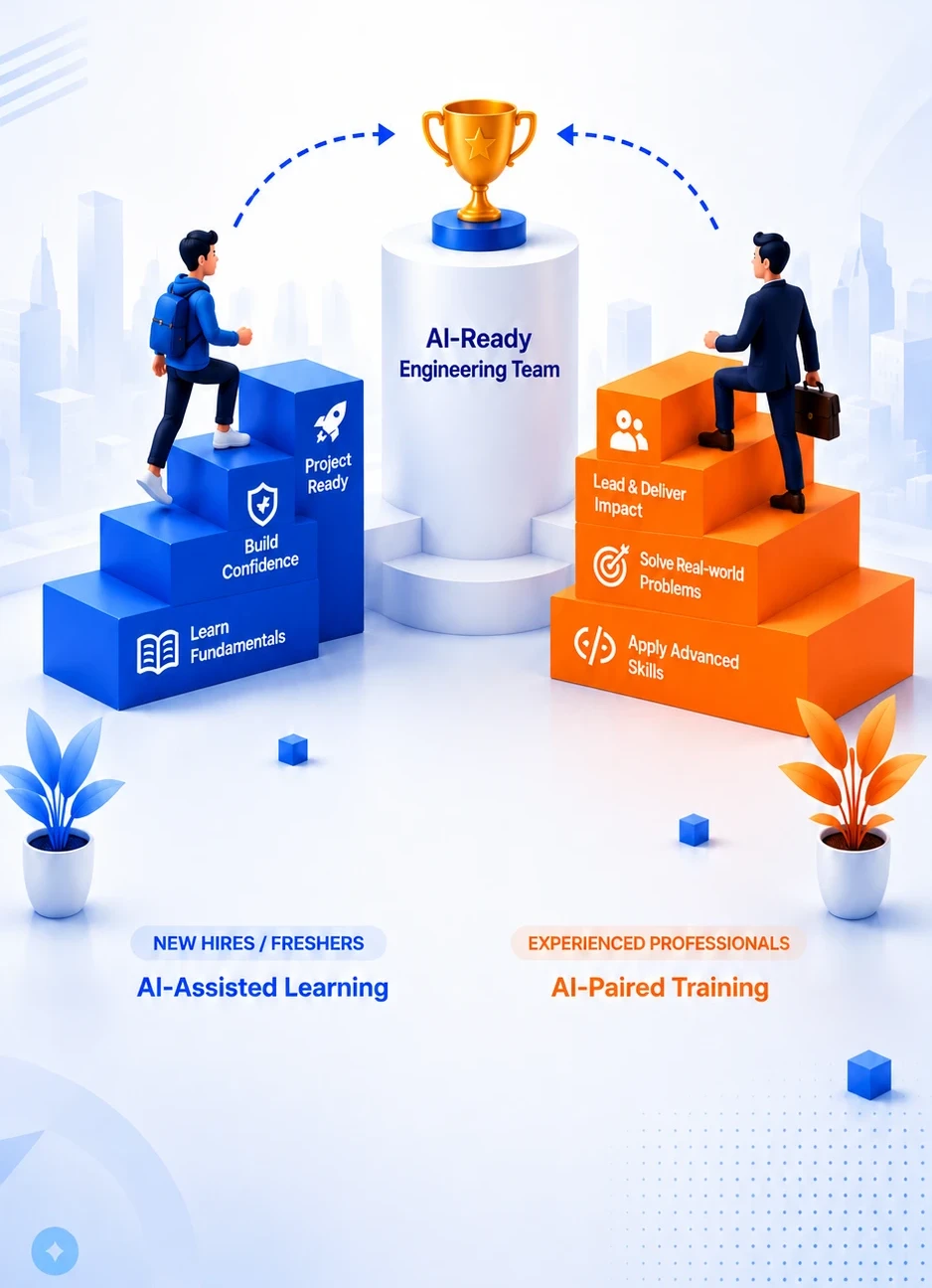
Upskilling & Induction Programs
Corporate ASP.NET Core NextJS Full Stack Course
Corporate ASP.NET Core and NextJS full stack course delivery joins Web API services to the Next.js App Router, so API design, rendering and caching are decided together. It runs on-site in Chennai or live online and is practised on one application taken through to deployment. Team size and schedule are agreed upfront.
Industry-Relevant ASP.NET Core NextJS Full Stack Skills
ASP.NET Core Web API design, EF Core data access, authentication, and Next.js rendering, caching and route handlers.
AI-Enabled Learning
Work effectively with Claude and AI development tools while human reasoning, engineering judgement and ownership stay at the centre of every ASP.NET Core NextJS Full Stack decision.
Induction & Upskilling Programs
Structured learning paths for new hires, freshers and experienced developers adopting or strengthening ASP.NET Core NextJS Full Stack skills.
Hands-On ASP.NET Core & Next.js Workflows
Build controllers and EF Core models, secure the API, render with the App Router, then measure, test and deploy.
Customized Corporate Programs
Align training with your roles, technology stack, delivery timeline, live projects and organisational requirements.
AI-Evaluated Skill Development
Evaluate practical progress through AI-assisted assessments that identify strengths, skill gaps and areas for improvement.
Design. Secure. Deliver.
ASP.NET Core NextJS Full Stack Developer Course Skills You Gain
Fifteen capabilities you leave with — ASP.NET Core Web APIs with EF Core and policy-based security, and a Next.js client rendered where it makes sense.
ASP.NET Core Web API Design
Build controllers or minimal APIs with model binding, versioning and status codes clients can rely on.
Dependency Injection & Middleware
Register services with the right lifetimes and compose the request pipeline from focused middleware.
Entity Framework Core
Model entities and relationships, write efficient LINQ queries, and version the database with migrations.
Authentication & Authorisation
Implement JWT and identity-based authentication with policy and role authorisation applied per endpoint.
Validation & Error Handling
Validate DTOs and return consistent problem details rather than leaking exceptions to the client.
Async & Performance
Write async end to end, avoid the blocking traps, and add caching and pagination where the data demands it.
Testing .NET Services
Write unit tests and integration tests with the in-memory host, covering the real routing and pipeline.
Configuration & Deployment
Manage configuration, secrets and logging per environment, and deploy the API as a container or to IIS.
App Router Architecture
Structure routes, layouts, templates and route groups so navigation, data and UI boundaries line up.
Server & Client Components
Decide what runs on the server and what ships to the browser, and keep the client bundle to what it must contain.
Rendering Strategies
Choose between static, dynamic and streaming rendering per route, and know what each costs at request time.
Data Fetching & Caching
Fetch on the server, control caching and revalidation deliberately, and avoid stale or duplicated requests.
Route Handlers & Server Actions
Build API route handlers and server actions with validation, so mutations run on the server with real checks.
Authentication & Sessions
Implement session handling, protected routes and middleware without leaking tokens into client-side code.
Forms & Mutations
Wire forms to server actions with progressive enhancement, optimistic updates and errors users can recover from.
How the verification works
How you verify your ASP.NET Core + Next.js Full Stack skills independently
Most training providers set their own test and mark their own paper. We do not. At the end of each stage of the ASP.NET Core + Next.js Full Stack Course you check your own readiness using your own ChatGPT, Claude, Gemini or other AI account. Wisen does not write the questions, does not see your answers, and does not record your score.
The reasoning is straightforward. A score we control proves very little — to an employer, or to you. A score produced by a tool we have no influence over is worth something. You ask the AI to test you on ASP.NET Core + Next.js Full Stack, it decides what to ask, and the result belongs to you alone.
Seventy per cent is the mark we treat as ready. Score seventy or above and you move on to the next stage. Score below it and we work through the gap with you: identify what was missed, teach it again, practise it, then go back to the AI and check. You repeat that loop as many times as it takes.
In short
- You use your own AI account, not one of ours.
- We do not write the questions and cannot influence them.
- Your score stays private — we never see it.
- Below seventy per cent, we work through the gap with you and you verify again.
Our Unique Promise
Independent AIVerification Checkpoint
You learn ASP.NET Core + Next.js Full Stack Course. AI verifies. Wisen helps you grow beyond 70%.
Use ChatGPT, Claude, or another AI tool to validate your ASP.NET Core + Next.js Full Stack Course readiness.
It is your learning journey. Go at your pace.
Every step you take today builds your tomorrow.
Our mission is your growth, always.
Placement Assistance
Career Support You Can Count On
A .NET API under a server-rendered Next.js client. We do not guarantee placement, and we would be suspicious of anyone who did — we guarantee the preparation.
- 01
Gain 2+ Years of Professional Knowledge
Authentication across a rendering boundary is where most teams get it wrong. Getting it right is precisely the judgement two years of production work develops.
- 02
Resume / Biodata Support
Get expert guidance to build a strong, professional resume that highlights your skills, projects and achievements.
- 03
Portfolio Development
Build real-world projects and a strong portfolio that demonstrates your practical skills to potential employers.
- 04
Interview Preparation
Expect questions on token handling, caching and server rendering alongside standard .NET material. We prepare you for the full spread.
- 05
Job Search Guidance
This combination appears in modernisation projects with real budgets. We help you find those programmes and speak to what they need.
- 06
Placement Assistance
We assist you in identifying relevant opportunities and connecting with potential employers.
- 07
Independent AI Verification Checkpoint
Your learning, projects and skills are verified by our Independent AI Verification System to ensure objective and unbiased evaluation.
- 08
Future-Ready Knowledge
Both platforms are investing heavily in server-side rendering and performance. What you learn here is aimed at where they are going.
Our Commitment
No employment guarantee is made. Where you go next depends on your effort, your assessments, your interviews and what employers require. We keep supporting you at every step of that.
Design. Practice. Master Full Stack.
ASP.NET Core NextJS Full Stack Online Course Materials
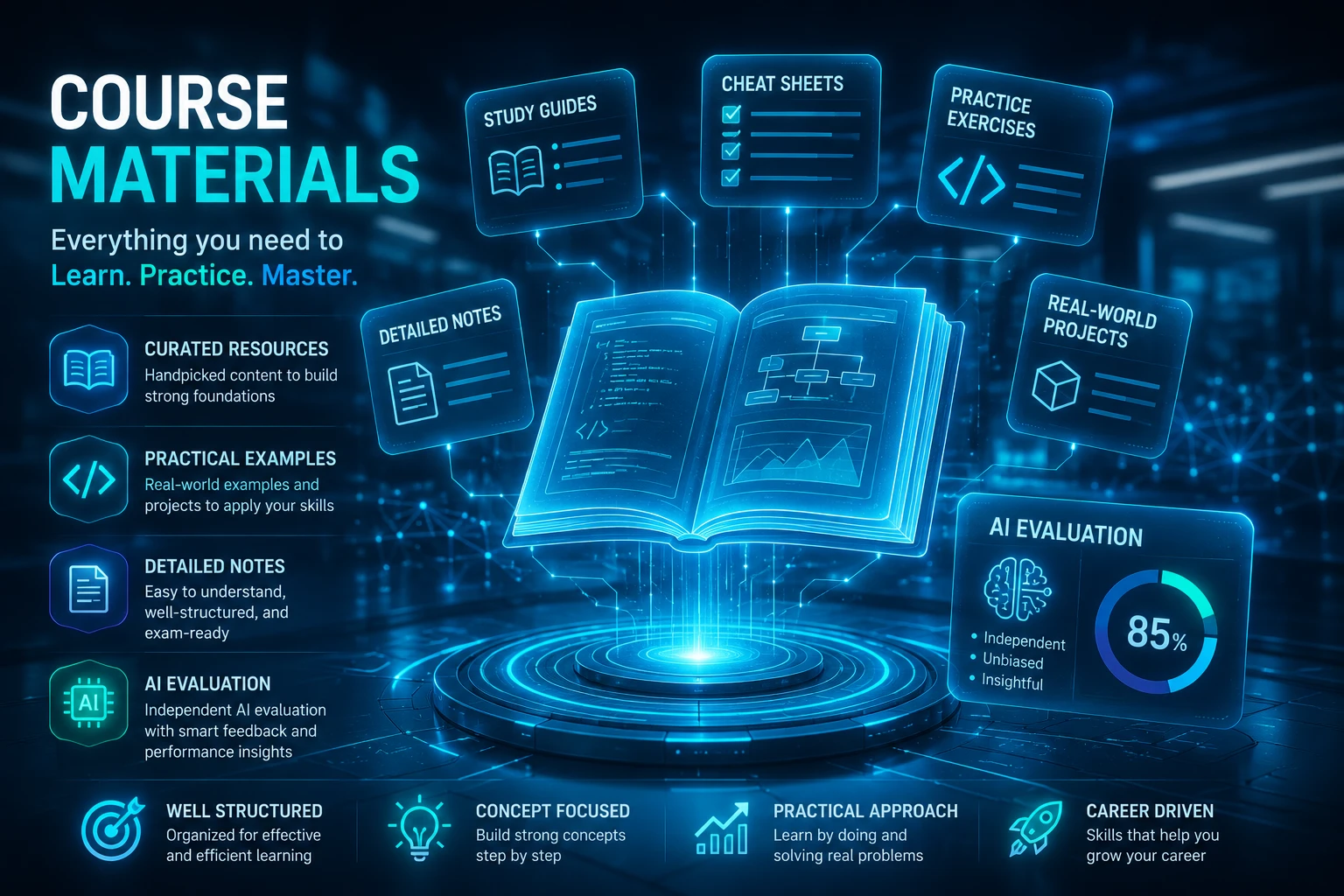
The ASP.NET Core NextJS full stack online course is delivered with material that joins API design to rendering strategy. Notes explain Web API design, EF Core and security alongside the Next.js application; lab activities carry a feature from entity to streamed route; and exercises ask you to decide what belongs on the server. All of it is authored in-house. Every page is reviewed line by line first.
What You Will Receive
ASP.NET Core and Next.js Notes & Explanations
Explanations of Web API design, EF Core, authorisation policies and Next.js rendering, written for practising developers rather than copied from documentation.
Guided Lab Activities
Labs that carry one change through planning, implementation and verification — a secured endpoint consumed by a server-rendered Next.js route among them.
Hands-On Exercises
Independent tasks on adding policies, choosing rendering modes and fixing caching, worked without a walkthrough to lean on.
Worked Walkthroughs
Recorded sessions showing project setup, the change itself, and the checks that prove it works.
Progressive Learning Path
A route from the fundamentals to a deployed ASP.NET Core API with a Next.js front end, in the order the live sessions follow.
Revision & Reference Sheets
Compact references for EF Core mappings, problem details and rendering modes, plus the review habits that keep AI-assisted work safe.
What Makes Our ASP.NET Core and Next.js Learning Materials Different?
27+ Years of Experience
Authored by trainers who weigh every ASP.NET Core and Next.js decision against decades of delivered software.
Human-Authored Content
Written by trainers who work with ASP.NET Core and Next.js daily, then reviewed line by line.
Original Learning Materials
Created in-house, not assembled from documentation or shared prompt collections.
Practice First
Every technique is applied to a real ASP.NET Core and Next.js task and its result inspected.
Continuously Refined
Revised as ASP.NET Core and Next.js and developer tooling move, so sessions reflect what works this month.
Review Discipline Built In
Materials teach reading the diff and testing the change, not accepting output on trust.
Plan. Secure. Deliver.
ASP.NET Core NextJS Full Stack Course Duration & Batch Timings
ASP.NET Core NextJS Full Stack Course from Wisen IT Solutions, Chennai runs live in two paces over 120 Hrs of instructor-led training. The lecture and practical time is split 50 : 50, with the practical half weighted towards building secured Web API endpoints and the Next.js routes above them.
Total Learning Hours
120 Hrs
Lecture : Practical
50 : 50
Batches
Weekday & Weekend
- Instructor-led sessions
- Guided lab activities
- Hands-on ASP.NET Core and Next.js practice
- Reviewed project work
Normal Track
2.5 Hours / Session
48 sessions · about 10 weeks
A steady pace for developers taking ASP.NET Core and Next.js training alongside a full working day.
- Working Developers
- College Students
- Team Leads
- Weekend Batches
Fast Track
5 Hours / Session
24 sessions · about 5 weeks
A concentrated schedule through the same ASP.NET Core and Next.js syllabus for learners free on weekdays.
- Full-Time Learners
- Job Seekers
- Fresh Graduates
- Career Switchers
What Every Seat Includes
- Live instructor-led sessions
- Hands-on ASP.NET Core and Next.js coding
- Guided lab activities
- Independent exercises
- AI-assisted learning
- Code review and feedback
- Doubt clarification
- Certificate on completion
Same Syllabus · Same Labs · Same Evaluation · Same Outcome
Whichever batch of the ASP.NET Core NextJS Full Stack Course you join, the syllabus, lab activities, exercises and evaluation are identical. Only the pace differs, so pick the track that fits the time you can genuinely give it each week.
Live online, worldwide
Join ASP.NET Core + Next.js Full Stack Course from anywhere in the world
Every session is taught live by a practising engineer — never a pre-recorded video. Batches run to Indian Standard Time, and the timing is adjusted to suit your time zone wherever you are.
Live, not recorded
You write code during the session, ask questions as they come up, and have that code reviewed.
Your time zone, any country
Weekday and weekend slots in IST. If none of them suit where you live, we schedule a batch that does.
Pay from outside India
International debit and credit cards, PayPal and direct bank transfer are all accepted.
Balanced Learning. Secured APIs. Career-Ready Skills.
ASP.NET Core and Next.js Lecture-Practical Ratio
ASP.NET Core and Next.js is a practice, not a subject to read about. The ASP.NET Core NextJS Full Stack Course is delivered on a 50 : 50 lecture-practical ratio, so every concept is applied in the same session it is explained, on code that behaves like the code you will be paid to write.
Sessions are spent building secured endpoints and the Next.js routes above them — which is what delivery work and technical interviews actually ask for, rather than a description of it.
50%Theory
50%Practical
50% Theory
Where each ASP.NET Core and Next.js idea comes from, and when it is the right one to reach for.
- Next.js Foundations
- Next.js: Styling, Assets and UI
- Next.js: Testing, Deployment and Operations
- ASP.NET Core Foundations
- ASP.NET Core: Authentication and Authorisation
- ASP.NET Core: Performance, Deployment and Project Work
50% Practical
What you do with it, in the same session, on code that behaves like production.
- Building controllers and minimal API endpoints
- Mapping entities and migrations with EF Core
- Adding JWT auth and authorisation policies
- Building App Router routes and layouts live
- Moving work across the server boundary
- Wiring a validated form to a server action
Why a 50 : 50 Split Works for ASP.NET Core and Next.js
See It Work First
Each idea is demonstrated running before you are asked to build with it.
Build It Immediately
Every concept becomes ASP.NET Core and Next.js code you write while it is still fresh.
Work on Real Code
Practice happens on realistic repositories, not on disposable snippets.
Fail Where It Is Safe
Break it in the room, where a trainer can explain what actually went wrong.
Prove the Skill
Leave able to demonstrate the work, not only to talk about it.
Our Learning Philosophy
Every ASP.NET Core and Next.js concept is followed by something you build yourself.
Clear Entry Bar. No Guesswork. Career-Ready Start.
ASP.NET Core NextJS Full Stack Course Prerequisites
This ASP.NET Core NextJS Full Stack Course assumes no prior ASP.NET Core and Next.js experience beyond the language and database prerequisites below. ASP.NET Core Web API, Entity Framework Core and authentication, and the Next.js side — routing, rendering strategies and data fetching — are introduced from the first session.
The ASP.NET Core NextJS Full Stack Course is delivered live online and in Chennai, so everyone starts the same exercises from the same baseline.
MandatoryC# and SQL Server Foundation
- C# is a mandatory prerequisite for this course
- SQL Server is a mandatory prerequisite — tables, joins, indexes and transactions
- Classes, interfaces and generics in C#
- LINQ and async/await in everyday use
- HTML structure and basic CSS
EngineeringDiscipline
- Willingness to review every change you write
- Care with credentials and connection strings
- Habit of describing a defect precisely
- Commitment to the hands-on ASP.NET Core NextJS Full Stack Course builds
Full Stack WorkspaceSetup
- A SQL Server instance — setup guidance provided
- A laptop with a stable internet connection
- The .NET SDK — setup guidance provided
- Node.js and npm for the Next.js client
- Visual Studio or VS Code plus a terminal
Who Can Join?
- Students & Graduates
- C# & Full-Stack Developers
- Tech Leads & Architects
- Teams moving to ASP.NET Core and Next.js in daily work
The Stack. End to End.
ASP.NET Core NextJS Full Stack Course Tools & Technologies
The ASP.NET Core NextJS Full Stack Course is taught inside the tools the work actually happens in. Next.js is taught in the App Router as it ships today — server components written in the editor, the data cache and streaming boundaries inspected on a running build. ASP.NET Core is taught through its request pipeline — middleware, filters and endpoints assembled at the .NET CLI and traced on a running service.
You leave able to decide what renders on the server, what reaches the client and what gets cached. You leave able to build a .NET service and account for every stage a request passes through. Every tool listed below is used in the sessions rather than only named in them.
Next.js Core
- App Router
- Server Components
- Layouts & Templates
- Server Actions
- Route Handlers
- Middleware
Data & Caching
- fetch & Revalidation
- The Data Cache
- Streaming & Suspense
- Static Generation
- Edge & Node Runtimes
- Dynamic Rendering
ASP.NET Core
- Minimal APIs
- Controllers
- Middleware
- Model Binding
- Filters
- Dependency Injection
Data & Persistence
- Entity Framework Core
- LINQ Queries
- Migrations
- Repository Layer
- SQL Server
- Background Services
Learning Outcome
You finish the ASP.NET Core NextJS Full Stack Course able to decide what renders on the server, what ships to the client and what is cached and build a .NET service and account for every stage of its pipeline — through project work you can defend in review.
- Drive the App Router
- Split Server & Client
- Build Web APIs
- Query With EF Core
Primary Sources
ASP.NET Core + Next.JS Official References
The API layer and the client layer are each taught from their own documentation.
- ASP.NET Core — Microsoft Learn
Microsoft’s reference for minimal APIs, controllers, middleware and hosting.
- Next.js — Official documentation
Vercel’s reference for the App Router, Server Components and rendering strategies.
Got Questions - Quick Answers
Frequently asked questions
Is there real hiring demand for the ASP.NET Core NextJS Full Stack Course skills in Chennai?
Product companies, global capability centres and services firms in Chennai all run teams on this stack, which keeps steady demand behind the ASP.NET Core NextJS Full Stack Course. Because the ASP.NET Core NextJS Full Stack Online Course is used for new builds and for long-lived applications alike, that demand spans startups and established engineering organisations.
Can freshers and non-IT graduates join ASP.NET Core NextJS Full Stack Online Training?
Yes. Freshers and graduates from non-IT streams join regularly, and ASP.NET Core NextJS Full Stack Online Training starts from the fundamentals before moving into advanced work. If your programming basics are thin we will say so before you enrol, and suggest the order in which to take the ASP.NET Core NextJS Full Stack Developer Course and its prerequisites.
What is the refund policy if I enrol in the ASP.NET Core NextJS Full Stack Course?
We run a one-week evaluation instead of a one-hour demo class. A ₹2,000 registration fee reserves your seat in the ASP.NET Core NextJS Full Stack Course; attend the first week of live sessions and, if the training is not the right fit, that registration fee is refunded in full. If you register but cannot attend, it converts to Training Credit valid for 12 months. Once the course fee is paid, ASP.NET Core NextJS Full Stack Online Training fees are transferable once, within a month, if you leave before two weeks, and are neither refundable nor transferable after two weeks of attendance.
What placement support do I get with the ASP.NET Core NextJS Full Stack Developer Course?
We do not promise a job, and you should be wary of anyone who does. What the ASP.NET Core NextJS Full Stack Developer Course includes is preparation: we help you prepare your biodata, build a portfolio from work you have actually done, and identify the knowledge gaps that would cost you an interview. That review covers the the ASP.NET Core NextJS Full Stack Course skills interviewers ask about today and the ones worth learning next, so you can keep preparing after the course ends.
Next.js and ASP.NET Core both want to render and route. How is that resolved?
That boundary is the first thing the course settles: which requests a Server Component serves directly, which belong to a .NET endpoint, where caching sits on either side, and how authentication survives the hop between the two servers.
Do I need C# or Next.js experience for this course?
C# is a mandatory prerequisite — classes, interfaces and generics, with LINQ and async/await in everyday use, plus SQL Server basics such as tables, joins, indexes and transactions, and HTML and basic CSS. No prior ASP.NET Core or Next.js experience is assumed. Web API, Entity Framework Core, authentication and the Next.js side are introduced from the first session.
Does putting Next.js in front of ASP.NET Core help with search visibility?
It can, because pages are rendered on the server rather than assembled in the browser. The course covers rendering strategies and caching as engineering decisions first, since a page that renders fast for a crawler and a page that renders correctly for a user are the same problem.
- 27+
- Years of training
Delivering technical training from Chennai since 1996. - 17,700+
- Learners empowered through training
Corporate teams, IT working professionals, career switchers and students. - 2,700+
- Happy students / year
Learners completing our programmes every year. - 30+
- Corporate clients
Product companies, service firms and startups.
Corporate training clients
Teams that train with Wisen IT Solutions, Chennai, India
Engineering teams across product companies, IT services firms and startups run their JavaScript, Angular, React and Next.js upskilling and induction programs with us.

Altimetrik 
Aparajitha Corporate Services 
Caresoft 
Dzine Hub 
Firstsource 
Gigamon 
Helios and Matheson 
NextGen Healthcare 
Perpetuuiti Technosoft 
R Systems 
SRM Institute of Science and Technology 
Temenos 
The Hindu 
Tamil Nadu Electricity Board 
WABCO

Build JavaScript for the AI-era
Plan your JavaScript training with Wisen IT Solutions, India
Tell us where you are today — a beginner, a working developer, or a team with a delivery deadline — and we will map the right course, format and schedule.
Think with AI. Don't Depend on AI.